Multifamily
Dallas Multifamily Replacement Identification
Target stabilized and value-add multifamily communities aligned with IRS timelines and local yield expectations.
Dallas Metro
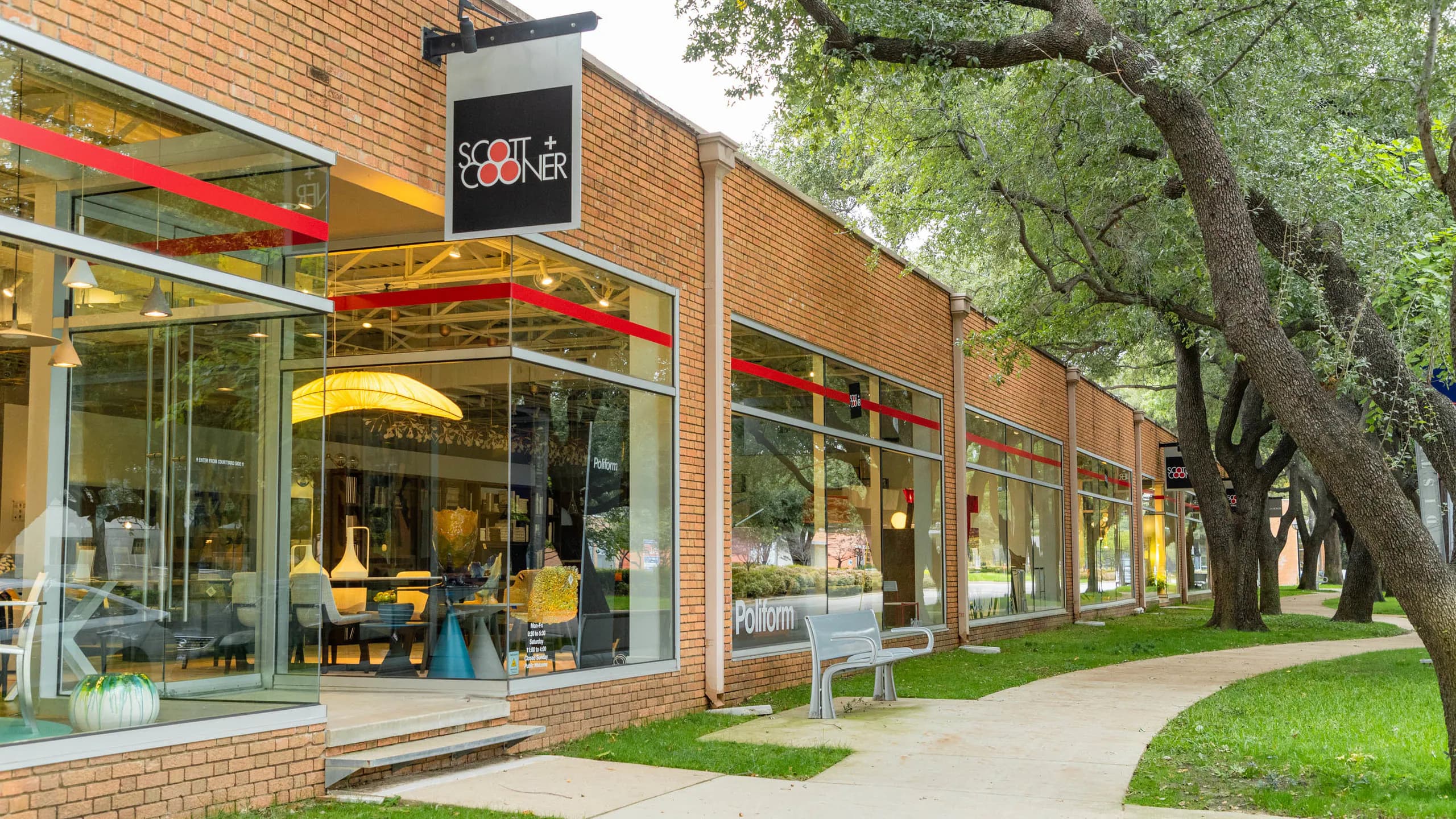
Design District, TX serves as a hub for showrooms, furniture retailers, and design-related businesses with significant commercial real estate activity.
The Dallas Design District sits between the Trinity River and Stemmons Freeway and has shifted from a pure furniture and showroom market into a mix of creative office, restaurant, and newer multifamily product. An owner selling here is usually holding a showroom building being repositioned, a Trinity Groves-area restaurant pad, or a newer mixed-use property near Sylvan Thirty.
Design District showroom buildings along Hi Line Drive and Slocum Street have increasingly been converted or repositioned into creative office and event space as furniture and design tenants have consolidated elsewhere. An owner exchanging out of one of these buildings should confirm current occupancy against the building's original showroom use, since a partially repositioned building often carries a mix of legacy and new tenant types that behave differently. Loading dock access and floor load capacity built for furniture delivery can be a selling point for a creative office or event tenant, but it can just as easily sit unused and add no value once the building's use shifts, so an owner should price that feature based on actual tenant demand rather than the building's original design intent.
Trinity Groves functions as a restaurant incubator, with concepts frequently opening, closing, or relocating within the development, which means retail pad income here carries more turnover risk than a stabilized net lease tenant elsewhere in Dallas. A buyer should ask for concept-level tenure history rather than relying on the property's overall occupancy rate.
Sylvan Thirty and similar newer developments have introduced ground-floor retail with multifamily or office above, giving the Design District a mixed-use product type that did not exist here a decade ago. An investor comparing this newer product against older showroom buildings should treat them as separate categories in the identification list rather than assuming geographic proximity makes them interchangeable. The multifamily component in these newer projects also draws a different resident profile than the district's older warehouse-adjacent housing, which affects how the ground-floor retail below it should be leased and underwritten.
Because much of the Design District's inventory is mid-repositioning, an investor targeting conversion candidates here often needs the two hundred percent rule to keep both partially repositioned and fully stabilized options open, since a conversion deal can stall on financing or entitlement issues that a stabilized property does not face.
Lenders financing Design District repositioning projects typically want a clear scope of remaining conversion work and a realistic stabilization timeline before committing. We coordinate that documentation with the qualified intermediary as soon as a Design District candidate is identified, since adaptive reuse underwriting tends to move slower than a standard stabilized acquisition.
Multifamily
Target stabilized and value-add multifamily communities aligned with IRS timelines and local yield expectations.
Industrial
Secure last mile warehouses, cross-dock, and bulk distribution assets that match logistics growth across North Texas.
Exchange Strategy
Design diversified identification lists with value weighting and compliance scoring under the 200 percent rule.
It can be, but a buyer should confirm current occupancy against the building's original showroom use, since many of these buildings are mid-repositioning into creative office and carry a mix of legacy and new tenants that behave differently.
Trinity Groves functions as a restaurant incubator with frequent concept turnover, so a buyer should request concept-level tenure history rather than relying on the property's overall occupancy figure to represent income stability.
Generally no. They are different product types with different tenant profiles and underwriting approaches, and treating them as interchangeable just because they sit in the same district can lead to a mismatched replacement decision.
Much of the district's inventory is mid-repositioning, so keeping both stabilized and conversion-stage candidates on the identification list usually requires the 200 percent rule rather than the narrower three property rule.
No. We coordinate identification and communication among your advisors. Whether a specific Design District transaction qualifies for tax deferral is determined by your CPA, tax attorney, and qualified intermediary.
Share your target asset and deadlines. Our team coordinates tours and underwriting within Dallas, TX.