Flex
Dallas Flex and Light Manufacturing Exchange
Blend office and production space requirements for light manufacturing, creative lab, and tech flex replacements.
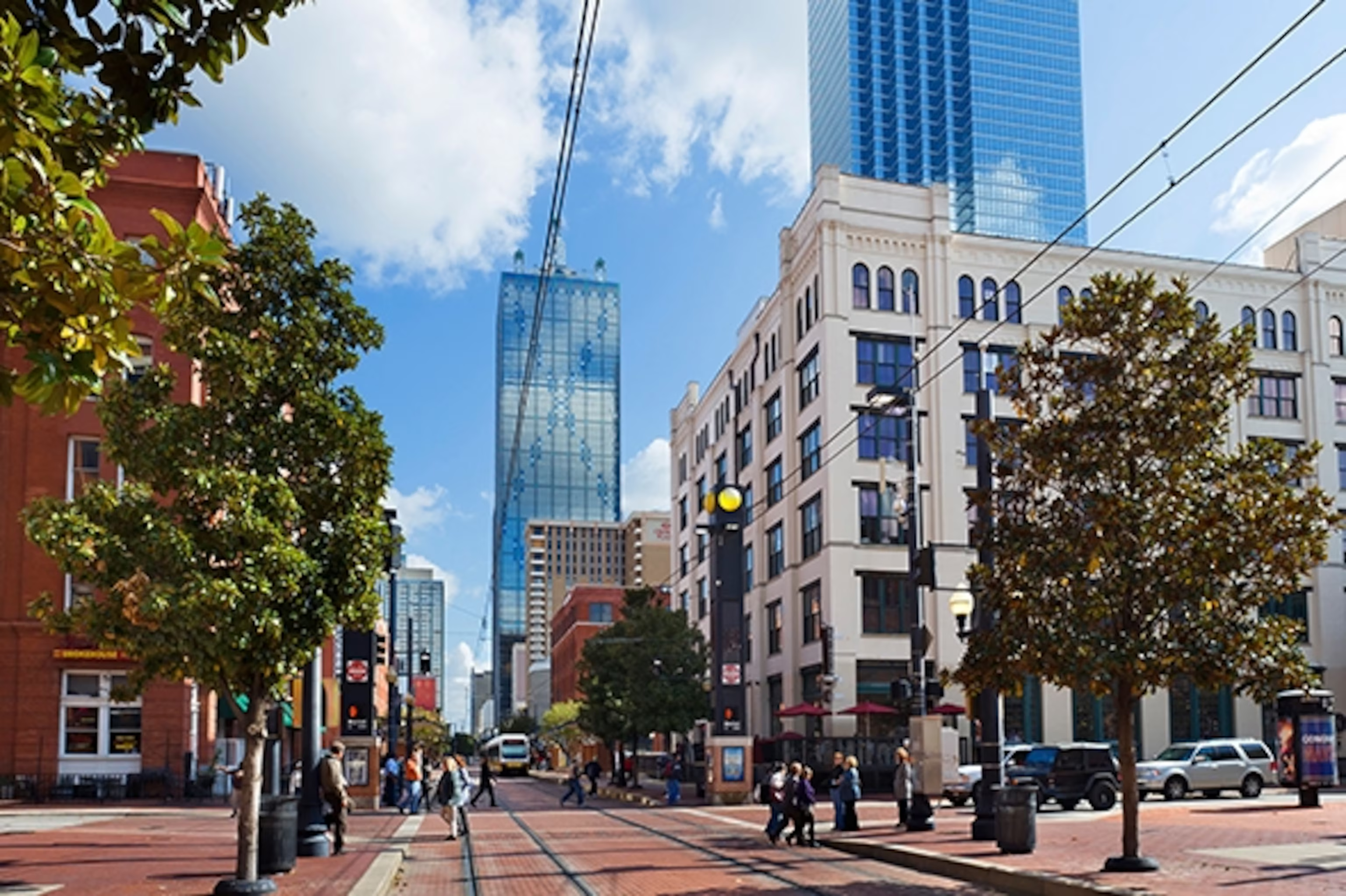
Dallas Metro
Downtown Dallas, TX represents a major commercial real estate market with significant 1031 exchange activity.
Downtown Dallas is in the middle of a multi-year shift as older office towers convert to residential and hospitality use, and an owner selling property here is often dealing with either a conversion candidate, a stabilized building near the AT&T Discovery District, or a Main Street District property carrying historic designation. Each of those has a distinct replacement search attached to it.
Several former bank and insurance towers downtown have been converted or are being evaluated for conversion to apartments, and an owner exiting a partial-interest or ground lease position tied to one of these projects needs replacement candidates evaluated on construction risk and lease-up timeline rather than stabilized occupancy alone. That is a different underwriting exercise than a straightforward stabilized office trade, and the identification list should reflect the added completion risk. Vacancy in Downtown's remaining office stock has also pushed some landlords toward conversion studies even without a signed construction contract, which means a seller should distinguish between a building that is genuinely under conversion and one that is simply being marketed with conversion potential attached to the listing.
Properties in the Main Street District often carry federal or state historic designations, and an owner selling one of these buildings should confirm with their tax advisor how any historic tax credit recapture interacts with the 1031 exchange timeline, since recapture exposure is a separate issue from capital gains deferral and does not automatically follow the replacement property into a new ownership structure.
The AT&T Discovery District and the nearby convention center corridor support hospitality and entertainment-adjacent retail demand that does not exist in most other downtown submarkets, and an investor identifying hospitality replacement candidates here should weigh convention calendar seasonality against a more stable office or retail alternative before finalizing the identification list. Restaurant and retail pads oriented toward event traffic in this corridor also see meaningfully different weekday and weekend patterns than a neighborhood retail center, which should factor into how a buyer projects year-round occupancy for those tenant categories.
Conversion and value-add downtown deals often move on a slower timeline than a stabilized suburban trade, since construction lenders and equity partners need more time to underwrite completion risk. We generally recommend the two hundred percent rule for these searches so a backup stabilized candidate stays on the list in case a conversion deal cannot close inside the one hundred eighty day window.
Lenders financing historic or conversion product downtown typically require more third party reporting than a standard commercial loan, including a property condition assessment scoped specifically to the conversion plan. We start that coordination with the qualified intermediary as soon as a downtown candidate is identified, since historic downtown financing timelines rarely compress well inside the final weeks before day one hundred eighty.
Flex
Blend office and production space requirements for light manufacturing, creative lab, and tech flex replacements.
Multifamily
Target stabilized and value-add multifamily communities aligned with IRS timelines and local yield expectations.
Exchange Strategy
Engineer three property lists with ranked backups, diligence status, and QI ready memorandums.
Potentially. Historic tax credit recapture is a separate issue from capital gains deferral, and the two do not automatically move together into a replacement property. An investor should confirm the interaction with their CPA or tax attorney before finalizing a Main Street District sale.
Conversion projects carry construction and lease-up risk that a stabilized asset does not, so construction lenders and equity partners typically require more underwriting time, which is why we usually recommend keeping a stabilized backup candidate on the identification list.
It can be strong but is more seasonal than a typical office or retail lease structure, since it tracks the convention calendar. An investor should weigh that seasonality against a more stable alternative before committing to a hospitality-only identification list.
We generally recommend the 200 percent rule when a conversion candidate is involved, since it allows a stabilized backup property to stay on the list if the conversion deal cannot close inside the exchange deadlines.
No. Our role is coordinating identification, sourcing, and communication among your advisors. Whether a specific downtown transaction qualifies is determined by your CPA, tax attorney, and qualified intermediary.
Share your target asset and deadlines. Our team coordinates tours and underwriting within Dallas, TX.